Death of Vito Corleone
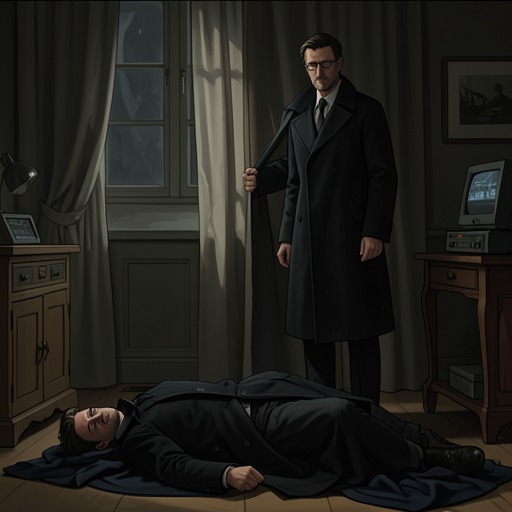
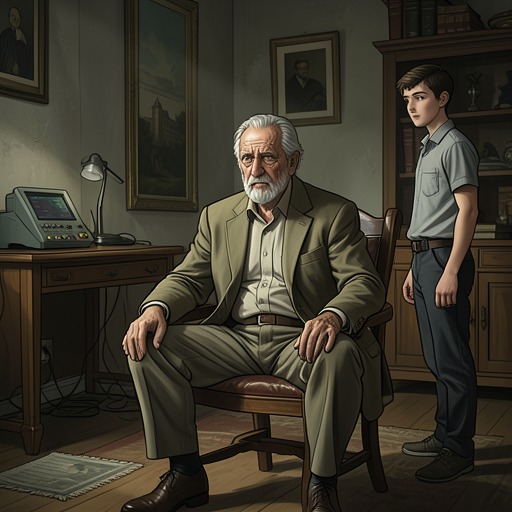
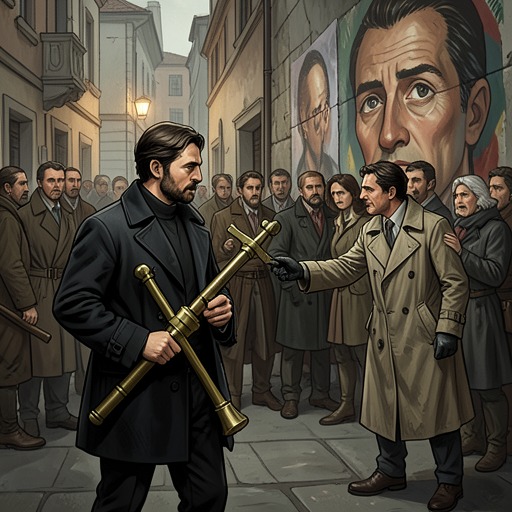
The GodfatherThe Death of Vito Corleone marks the end of the founding patriarch’s life and the final transfer of authority to Michael Corleone. Vito dies not in a war or assassination, but while tending tomato vines at his Long Beach home, surrounded at the last by his garden, his youngest son, and the men of his household. His passing closes the era in which personal loyalty, favors, fear, and affection were embodied in one man, while preparing the Corleone Family for a colder, more centralized future under Michael.
Background and the Order Vito Built
Vito’s death gains its full significance from the system he had created. He was the man to whom the powerless came for help, whether they needed employment, release from jail, a loan, or intervention with a landlord. Amerigo Bonasera’s turn toward Vito after losing faith in law and order expresses the alternative authority the Don represented: a supplicant had to proclaim friendship, accept a debt, and trust Vito to carry the trouble to its solution. The reward was not merely money or protection but an enduring obligation that could later be redeemed by a service.
That personal authority had gradually been converted into an organization. Vito appointed Peter Clemenza and Salvatore Tessio as caporegimes, placed soldiers beneath them, made Genco Abbandando his Consigliere, and insulated himself from operational acts through layers of intermediaries. The arrangement protected the Don from direct exposure while making loyalty, secrecy, and obedience into institutional functions. Tom Hagen’s appointment as Consigliere later broke the tradition that the post belonged to a full-blooded Sicilian, showing that Vito could preserve the office while adapting its requirements to the family he had actually built.
Vito’s power also rested on a broader political and economic network. During the Great Depression, his men retained work and dignity while others depended on contemptuous official charity; imprisoned employees’ families received allowances, and silence was rewarded with care after release. Vito helped neighborhood families obtain relief, jobs, loans, and political guidance, while sending promising young men to college so that they might become lawyers, prosecutors, and judges. He then carried peace among underworld organizations in Los Angeles, San Francisco, Cleveland, Chicago, Philadelphia, Miami, and Boston, establishing spheres of influence and an agreement to prevent wider conflict.
The old order nevertheless stood under pressure. The 1947 war against the Five Families was costly, and police pressure following the murder of Captain McCluskey damaged gambling operations. After the peace, the Barzini Family became the dominant power in the New York area and began encroaching on Corleone gambling territory. At the family meeting before Vito’s death, Michael’s takeover had already produced strain because succession was not automatically hereditary: powerful caporegimes such as Clemenza and Tessio could once have become Dons or broken away to found their own families. Vito’s death therefore occurs at the moment when his personal legitimacy is fading and Michael must turn succession into an accomplished fact.
The Garden and the Fatal Attack
On a sunny Sunday morning, while the women of the household were at church, Vito dressed in a gardening uniform: baggy gray trousers, a faded blue shirt, and a battered dirty-brown fedora with a stained gray silk hatband. He had gained considerable weight and claimed that gardening was for his health, but the deeper reason was pleasure. The garden recalled his childhood in Sicily without reproducing the terror and sorrow associated with his father’s death.
The scene gives Vito’s final hours a domestic precision absent from the violence that shaped his reign. Beans stood in rows with small white flowers, scallions formed a green boundary, and a barrel of cow manure served as fertilizer. Vito had built wooden frames himself, cross-tying sticks with thick white string so the tomato vines could climb. He watered the plants before the sun grew too hot, understanding that water and sunlight were both necessary but could become dangerous when carelessly combined. He searched for ants because their presence signaled lice in the vegetables and the need to spray.
The garden’s ordinary work suddenly becomes a confrontation with mortality. As Vito bent over the last plants, the sun seemed to descend close to his head and the air filled with golden specks. Michael’s oldest boy ran toward him inside a blinding yellow shield of light. Vito recognized the danger behind the appearance and waved the boy away. Almost immediately, a massive blow struck inside his chest. He choked for air and pitched forward into the earth.
The boy ran for Michael. Michael and several men from the mall gate reached the garden, found Vito lying prone and clutching handfuls of soil, and carried him to the shade of the stone-flagged patio. Michael knelt beside his father and held his hand while the others called for an ambulance and a doctor. Vito managed to open his eyes and see Michael once more. His face had turned almost blue from the heart attack, yet he remained aware of the garden and the light around him. His final words are, "Life is so beautiful."
Vito died before the women returned from church, before the ambulance arrived, and before the doctor could reach him. He was surrounded by men and held the hand of the son he had loved most. The death is therefore both sudden and ceremonially prepared: the body fails in the midst of a carefully tended living world, while the family’s male hierarchy gathers around it and receives the final presence of the founder.
Funeral and Public Meaning
The funeral was royal in scale. The Five Families sent their Dons and caporegimes, as did the Tessio and Clemenza Families. The attendance demonstrated that Vito’s influence exceeded the boundaries of his own household even as his death exposed the political fragility of the order he had maintained. Johnny Fontane attended despite Michael’s advice not to appear, then publicly declared that Vito was his Godfather and the finest man he had ever known, making clear that personal gratitude mattered more to him than the possible danger of public association.
The wake returned the Don to the house of the mall and to an older social form. Amerigo Bonasera prepared Vito’s body with the devotion owed to an old friend and Godfather. Visitors remarked that death had not erased the nobility and dignity of Vito’s countenance. Bonasera’s pride was complicated by private knowledge: he alone understood how severely death had altered the appearance beneath the composed surface. The man whose authority had begun with Bonasera’s appeal for justice was now entrusted to Bonasera’s hands in death, completing a circle of obligation between the two men.
The mourners included old friends, servants, relatives, business associates, and representatives of distant underworld centers. Nazorine and his family came; Lucy Mancini arrived from Las Vegas; Tom Hagen came with his family; Dons attended from San Francisco, Los Angeles, Boston, and Cleveland. Rocco Lampone and Albert Neri served as pallbearers with Clemenza and Tessio, joined by Vito’s sons. The mall and its houses filled with floral wreaths, turning the family compound into a public monument to the Don’s relationships.
Succession and Political Consequences
Vito’s death does not simply remove a character; it eliminates the personal mediator who had held competing interests in balance. His authority had depended on a recognizable blend of tradition, generosity, friendship, fear, and demonstrated capacity. The organization’s layers could transmit orders, but they could not reproduce the emotional and social legitimacy of the man at the top. Michael inherits the machinery, the debts, and the enemies, but not the same manner of rule.
The meeting held in the library after Vito’s semiretirement had already revealed the difficulty. Michael had taken over the family business, yet the atmosphere was strained. Clemenza and Tessio possessed their own histories, men, and territorial identities, and the family’s strength had declined since Vito made peace with the Five Families. The Barzini Family, allied with the Tattaglia Family, had become stronger and was testing the Corleones by moving into their gambling areas. Vito’s death leaves Michael no protective interval in which to rely on the old Don’s authority; he must make the succession credible while rivals are actively measuring weakness.
Michael responds through planning and political maneuvering rather than by merely inheriting a title. The bloody victory of the Corleone Family is not complete until a year of delicate maneuvering establishes Michael as the most powerful Family chief in the United States. During that year he divides his time between headquarters at the Long Beach mall and a new home in Las Vegas, then decides to close the New York operation and sell the houses and mall property. The decision converts Vito’s old physical center into something that can be abandoned as Michael’s power moves westward.
The final arrangement is more centralized and geographically reorganized than Vito’s earlier domain. Clemenza has his own Family, Rocco Lampone serves as Michael’s caporegime, Albert Neri heads security for the family-controlled hotels in Nevada, and Tom Hagen belongs to Michael’s Western Family. The result is not the disappearance of Vito’s structure but its redistribution into a new hierarchy, one less dependent on the Long Beach household and more suited to Michael’s control of Las Vegas and the family’s future.
Narrative Significance
Vito’s final scene contrasts two forms of power. His public career made him an underworld apostle of peace, a provider of employment and protection, a political force, and the architect of a disciplined chain of command. His death strips away those instruments and returns him to soil, plants, sunlight, and the memory of Sicily. The garden does not erase the violence of his life; it places that violence beside the patient acts of cultivation through which he imagined himself as protector of a small world.
The ending also sharpens the difference between Vito’s paternal government and the impersonal pressures surrounding it. Vito could call his world his own affairs and insist that its members manage it themselves, but his order still depended on negotiations with police, politicians, courts, rival families, and the wider American economy. His death exposes the limit of personal sovereignty: however extensive the network, a heart attack in a garden cannot be delayed by loyalty, money, or organizational insulation.
At the same time, the funeral confirms that Vito’s influence survives as memory, obligation, and political capital. The people who arrive from across the country do not merely mourn a private father. They acknowledge a founder whose favors had made careers, whose peace agreements had stabilized territories, and whose methods had protected an entire network. Yet Michael’s later consolidation shows that remembrance is not succession. Vito’s death closes the age of the Godfather as a singular paternal presence; Michael’s rise begins the age of the family as a more mobile, disciplined, and strategically managed power.